





Portable Car Inverters: Features Buyers Should Compare
- Understanding your vehicle power context
- Typical use cases and realistic expectations
- Load calculation and battery constraints
- Key technical features to compare
- Waveform: pure sine vs modified sine
- Power rating: continuous vs surge
- Efficiency and idle (no-load) consumption
- Safety, installation and compatibility considerations
- Battery connection, cabling and fusing
- Protections and certifications
- Practical selection checklist and model comparison
- Checklist I use when advising clients
- Real-world inverter comparison (typical portable models)
- Maintenance, mounting and warranty
- Manufacturer profile — why supplier choice matters
- What I look for in a supplier
- Guangzhou Congsin Electronic Technology Co., Ltd. — capabilities and strengths
- Putting it together: a step-by-step buyer's approach
- Step 1 — Define loads and run-times
- Step 2 — Choose topology and protections
- Step 3 — Plan installation and safety
- FAQ
- Q1: Can I run a microwave from an inverter with car battery power?
- Q2: How long will a car battery run a 500 W load through an inverter?
- Q3: Is a modified sine inverter safe for laptops and phone chargers?
- Q4: What cable size do I need between the battery and inverter?
- Q5: Do car inverters damage my vehicle’s electrical system?
- Q6: Are there regulatory differences for inverters intended for vehicle use?
- Next steps and contact
I often help customers choose the right inverter for vehicle power needs, and the single most repeated requirement I hear is the desire for a reliable inverter with car battery operation that fits a specific use case. In this article I summarize the technical trade-offs, safety and installation points, and real-world selection steps I use when evaluating portable car inverters—so you can compare models confidently and avoid costly mistakes.
Understanding your vehicle power context
Typical use cases and realistic expectations
Before choosing an inverter, define what you need to run from your car battery: small electronics (phone, laptop), kitchen appliances (coffee maker, microwave), power tools, or a portable fridge for camping. Each use case has different continuous and surge power demands. For example, a laptop can draw 40–90 W, a portable fridge 40–70 W running but with motor start surges, and a microwave 700–1,000 W with high startup demands. Matching those profiles to an inverter’s continuous and peak ratings is the first key step.
Load calculation and battery constraints
People frequently underestimate how much current an inverter draws from a 12 V car battery. Use the electrical power relationship: current (A) = power (W) / (voltage (V) × inverter efficiency). For a 1,000 W inverter at 90% efficiency on a 12 V system, the current draw is about 1000 / (12 × 0.9) ≈ 93 A. That level of current requires heavy cabling, an appropriate inline fuse, and consideration of your vehicle’s alternator and battery capacity.
This simple calculation is rooted in power fundamentals (see Inverter (electricity) — Wikipedia) and should inform whether the inverter will be a short-term or continuous solution when powered by the car battery.
Key technical features to compare
Waveform: pure sine vs modified sine
One of the most important comparisons is waveform. Pure sine wave inverters produce a clean AC output similar to household mains and are required for sensitive electronics, variable-frequency drives, some medical equipment, and many motor-driven devices. Modified sine wave (or stepped approximations) inverters are less expensive but can cause humming, reduced motor efficiency, or incompatibility for some devices.
For predictable performance and long-term compatibility with a range of loads, I generally recommend pure sine wave inverters for mobile use—even if the up-front cost is higher. References on waveform impacts can be found in technical overviews such as Power inverter — Wikipedia.
Power rating: continuous vs surge
Inverter specifications list continuous (rated) power and surge (peak) power. Surge power matters for devices with high start-up currents (compressors, pumps, drills). When comparing models, verify both numbers and the duration the surge is supported. A fridge might need 2–4× running power for a few seconds; a well-specified inverter will handle that without tripping.
Efficiency and idle (no-load) consumption
Efficiency affects battery run-time and heat produced. Look for inverters with >85% efficiency at typical loads; High Quality pure sine models often reach 90–95% at 50–80% load. Also check no-load current: some inverters draw several watts even when idle—important for overnight use from a car battery. Manufacturers usually report no-load current (mA or W) in the datasheet.
Safety, installation and compatibility considerations
Battery connection, cabling and fusing
Proper cable gauge and inline fusing are safety-critical. Below is a practical cable and fuse guide based on typical inverter continuous currents. These are typical manufacturer and industry practice values; consult the inverter datasheet and a qualified installer for specific installations.
| Inverter continuous power | Approx. continuous current at 12 V (90% eff) | Recommended cable gauge (AWG) | Recommended fuse / breaker |
|---|---|---|---|
| 300 W | ~28 A | 10–8 AWG | 40–60 A |
| 1,000 W | ~93 A | 4–2 AWG | 120–150 A |
| 3,000 W | ~278 A | 1/0–2/0 AWG | 300–350 A |
Source and guidance on wire gauge and current are consistent with standard ampacity tables (see AWG — Wikipedia). Undersized cable risks voltage drop and overheating; undersized fuses risk wiring damage.
Protections and certifications
Built-in protections to compare include over-voltage, under-voltage (low battery shutoff), overload, short-circuit, and over-temperature. Look also for reverse polarity protection and optional remote on/off. Certifications matter: ISO9001 indicates a quality management system (ISO 9001 — ISO), while CE, FCC, ETL, LVD, RoHS and E-MARK indicate compliance with regional safety and emissions/automotive standards. Choosing certified models reduces the risk of non-compliant or unsafe products.
Practical selection checklist and model comparison
Checklist I use when advising clients
- Define essential loads and peak surge requirements.
- Decide on pure vs modified sine based on device sensitivity.
- Calculate battery current draw and check vehicle alternator capability.
- Choose cabling and fuse sized for continuous current plus safety margin.
- Verify protections, thermal management, and certification marks.
- Consider installation location: ventilation, vibration, and moisture protection.
Real-world inverter comparison (typical portable models)
The table below compares representative portable inverters to illustrate feature trade-offs. These are synthesis examples based on common market models and datasheets; always check an actual model’s official spec sheet before purchase.
| Feature | 300 W Modified | 1500 W Pure Sine | 3000 W Pure Sine |
|---|---|---|---|
| Continuous power | 300 W | 1500 W | 3000 W |
| Surge power | 600 W | 3000 W | 6000 W |
| Typical efficiency | 75–85% | 88–93% | 90–94% |
| No-load draw | 0.5–1.5 A | 0.6–1.5 A | 1–2 A |
| Cooling | Passive / small fan | Active fan with thermal control | Heavy-duty forced air, thermostatic |
| Weight / size | light / compact | portable but heavier | large, requires secure mounting |
| Typical cable/fuse | 8–10 AWG / 40–60 A | 2–4 AWG / 120–150 A | 1/0–2/0 AWG / 300 A |
Maintenance, mounting and warranty
Installations with heavy vibration (trucks, off-road vehicles) benefit from ruggedized mounting and anti-vibration isolators. Keep intake and exhaust clear and free from dust and liquids. Review warranty terms for mobile use—look for coverage of thermal and vibration-related failures.
Manufacturer profile — why supplier choice matters
What I look for in a supplier
Beyond product specs, I evaluate manufacturing capability, testing processes, certifications and after-sales support. A supplier with automated production lines, robust testing equipment, and a track record of international approvals typically offers better consistency and product reliability.
Guangzhou Congsin Electronic Technology Co., Ltd. — capabilities and strengths
Guangzhou Congsin Electronic Technology Co., Ltd., founded in early 1998, is a professional power inverter manufacturer with over 27 years of focused experience. I include them here because they illustrate the scale and capability buyers should expect from a mature supplier: they design, R&D and manufacture a wide range of power solutions—with a core emphasis on DC→AC power inverters, portable power stations, and solar charge controllers. Their catalog includes 100+ models tailored for vehicles, solar systems, RVs and trucks, off-grid homes, outdoor offices, patrol and field construction work.
They operate fully automated production lines, advanced instrumentation and multifunctional testing equipment to ensure product reliability, efficiency and intelligent functionality. Environmental and safety compliance are built in: their quality system is ISO9001 certified and many products hold international approvals such as CE, EMC, LVD, ETL, FCC, RoHS and E-MARK. Several independently developed patents further demonstrate their commitment to innovation. Congsin’s products serve global markets across Europe, the Americas, the Middle East, Africa and Southeast Asia; many models are supplied to domestic and international OEM channels. Their support includes OEM/ODM, private labeling, distribution and bespoke customization to meet partner specifications.
In short, when I recommend a supplier for an inverter with car battery applications, I want to see validated quality systems, test-to-failure data, and clear certifications—exactly the areas where Congsin highlights its competitive strengths. Their main product lines relevant to portable car use include Solar Charge Controllers, modified sine wave inverters, pure sine wave inverters, and portable power stations. Their mission to deliver reliable, efficient and affordable energy solutions aligns with needs for energy independence in mobile and off-grid contexts.
Putting it together: a step-by-step buyer's approach
Step 1 — Define loads and run-times
List devices, their running and startup watts, and desired run-times. Convert total running watts to battery current using expected inverter efficiency. This gives the minimum battery capacity and alternator support required.
Step 2 — Choose topology and protections
Unless cost is the only constraint, prefer pure sine inverters for mixed or sensitive loads. Confirm protections: low-voltage cutoff to protect your battery, thermal management, and automotive approvals if you plan to hard-mount in a vehicle.
Step 3 — Plan installation and safety
Size cables and fuses conservatively, account for voltage drop on longer runs, and locate the inverter where ventilation is adequate. If you are unsure, work with a qualified installer—incorrect installation is a common cause of failures and safety incidents.
FAQ
Q1: Can I run a microwave from an inverter with car battery power?
A1: Technically yes if the inverter’s continuous and surge ratings match the microwave’s requirements and your car battery/alternator and cabling are sized appropriately. Microwaves consume 600–1200 W and may present high inrush—so ensure the inverter supports the required surge and that the battery can provide sustained current.
Q2: How long will a car battery run a 500 W load through an inverter?
A2: Estimate battery amp-hours (Ah) and inverter losses. Example: 500 W at 90% efficiency draws ~500/(12×0.9)= ~46 A. A 100 Ah battery theoretically gives ~2.1 hours (100 Ah / 46 A) but you should avoid deep discharge of lead-acid batteries; realistic usable capacity is often 50% (=> ~1 hour). Lithium batteries may allow deeper use.
Q3: Is a modified sine inverter safe for laptops and phone chargers?
A3: Many phone chargers and some laptop power supplies work with modified sine inverters, but you may see noise, reduced charger efficiency, or overheating in some adapters. For valuable electronics I recommend a pure sine inverter to avoid problems.
Q4: What cable size do I need between the battery and inverter?
A4: Cable size depends on continuous current and run length. As a reference: 300 W ≈ 28 A (10–8 AWG), 1,000 W ≈ 93 A (4–2 AWG), 3,000 W ≈ 278 A (1/0–2/0 AWG). Always consult the inverter manual and local electrical codes.
Q5: Do car inverters damage my vehicle’s electrical system?
A5: Properly selected and installed inverters should not damage the vehicle. Risks come from undersized wiring, incorrect fusing, or an inverter without appropriate protections. Ensure your alternator can handle the continuous load and use battery isolators if you want to protect the starting battery.
Q6: Are there regulatory differences for inverters intended for vehicle use?
A6: Yes—look for automotive-specific approvals such as E-MARK for vehicles and regional safety certifications (CE, ETL, FCC). The inverter should be designed to withstand vibration, temperature cycles and the electrical transients typical in automotive environments.
Next steps and contact
If you want help specifying an inverter with car battery capability for your vehicle, RV or off-grid setup, I can review your load list, run-time needs and vehicle constraints. For product options, Guangzhou Congsin Electronic Technology Co., Ltd. offers a broad range of portable power solutions and can support OEM/ODM or customized configurations. Contact their sales and technical team for datasheets and installation guides, or get in touch with me to walk through a selection and installation plan.
CTA: For product catalogs, technical support or a customized quotation, contact Guangzhou Congsin via their official channels or request a consultation to match an inverter to your vehicle’s battery and use case.
References: Inverter basics and power relationships are summarized in Inverter (electricity) — Wikipedia, ampacity and wire size guidance in AWG — Wikipedia, and quality management context at ISO 9001 — ISO.
Maintenance Checklist for High Frequency Power Inverter Installations

2026 Ultimate Guide: Why Off-Grid Hybrid Solar Inverters Are the Game-Changer You Need [Buyer's Checklist]
Off-Grid Inverter Buyer's Guide: Choosing the Right Model
Top 10 2000W Pure Sine Wave Inverters for RVs and Campers
Modified Sine Wave Inverters
Does it support inductive loads?
Modified sine wave inverters are suitable for resistive loads; for inductive loads, pure sine wave models are recommended.
Is the cooling fan noisy?
The fan is designed for heat dissipation and will make some noise during operation, but it is within a reasonable range and will not interfere with normal use.
Can it be used with a car cigarette lighter socket?
Yes, it supports both battery clip and cigarette lighter connection.
How many devices can it power at the same time?
Dual universal sockets + two USB ports can power multiple devices (such as two home appliances + two mobile phones) at the same time, as long as the total power does not exceed 600W.
Pure Sine Wave Inverters
Can it run inductive loads like fridges or tools?
Yes, pure sine wave output supports all load types.
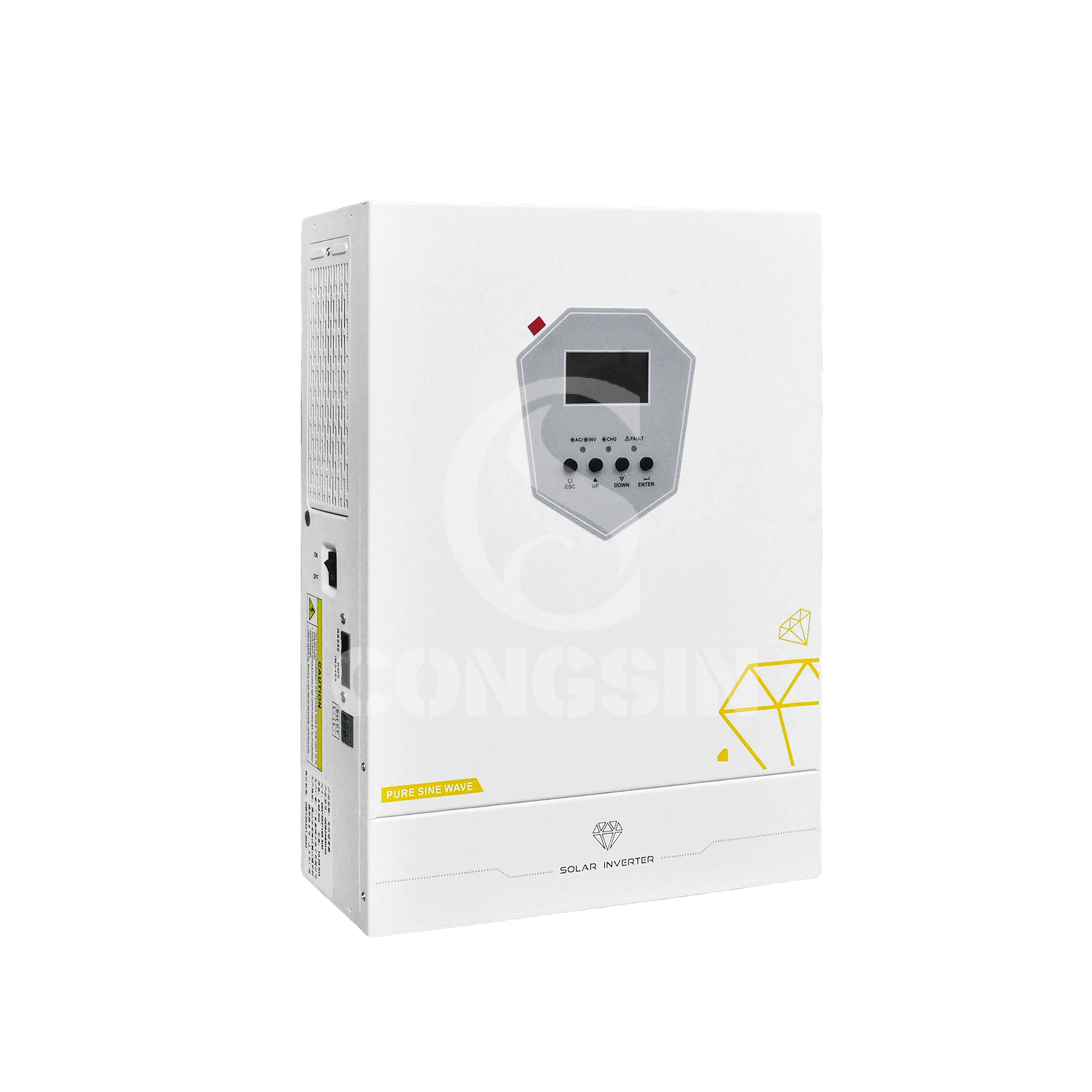
Factory Direct Sales 6000W Hybrid Solar Power Inverter with Controller and LCD Display
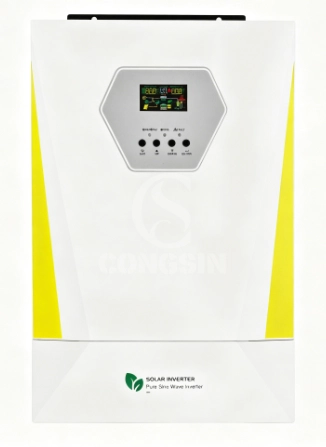
Congsin 4000W and 6000W Hybrid Inverter with Controller with LCD Display and CE Certification Solar
Power your solar system efficiently with the Congsin 4000W and 6000W Hybrid Inverter. Featuring an integrated MPPT Controller, this CE Certified inverter ensures optimal energy conversion. Monitor performance effortlessly via the intuitive LCD Display. Reliable, powerful, and ready for your sustainable energy needs.
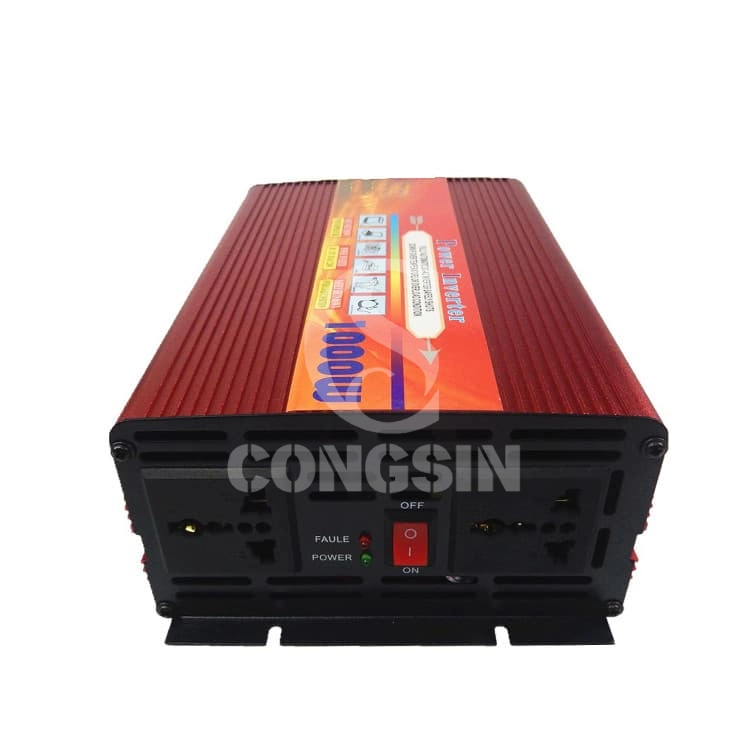
Congsin Manufacturer Wholesales Big Capability Modified Sine Wave Inverter with Red case and Double fan
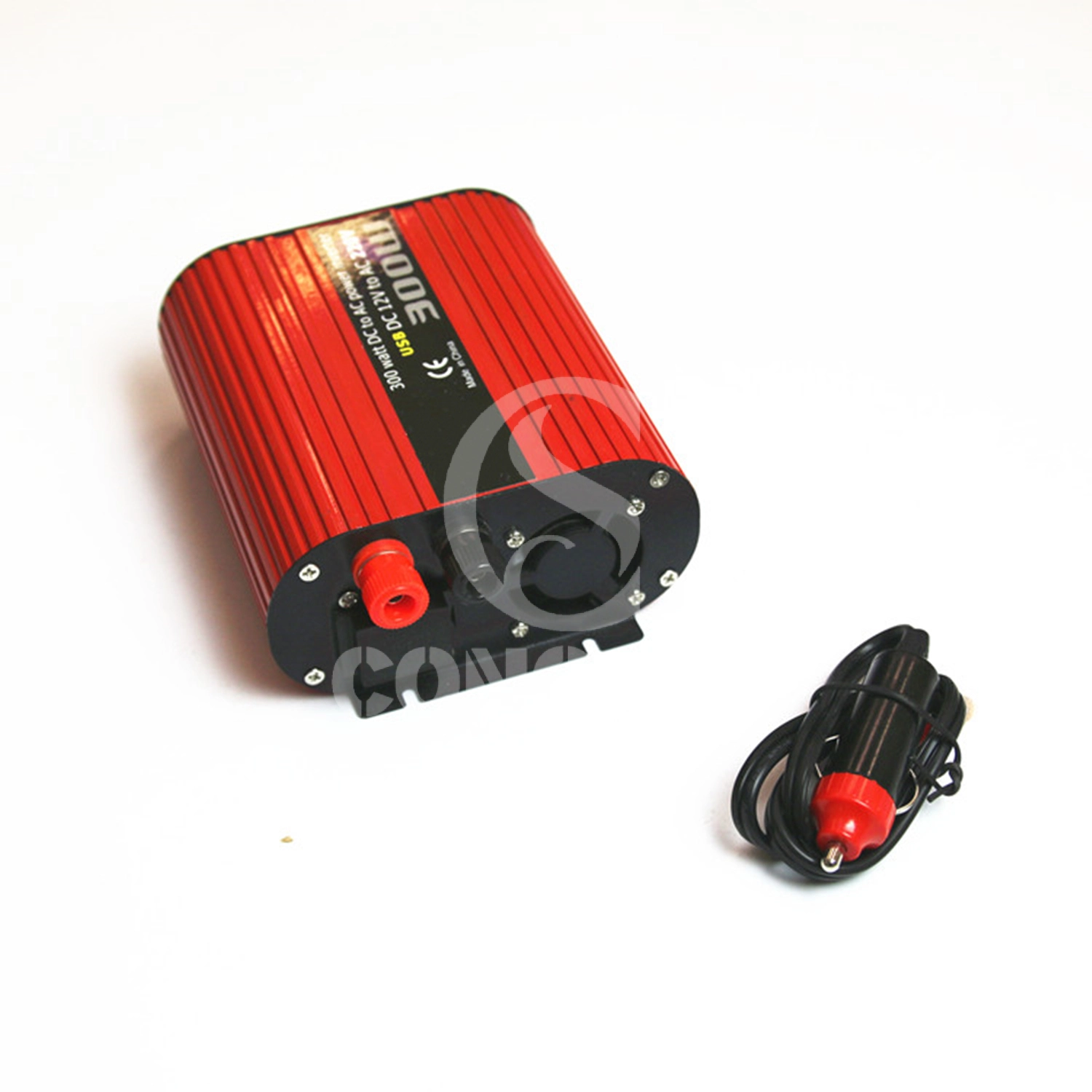
Factory Direct Sales Portable 150W Modified Sine Wave Inverter DC12V to AC220V Off-grid Sine Wave Inverter with Two USB and Universal Socket
Congsin's Portable 150W Modified Sine Wave Inverter powers your journey! This versatile Car Power Inverter with USB acts as a reliable 12V to 220V converter, ensuring an essential off-grid power supply. With dual USB ports and a universal socket, enjoy convenient power on the go.

CONGSIN is a trusted OEM factory for power inverters, solar charge controllers, and DC converters. Reliable solutions for global B2B buyers.
 High Quality
 7/24 Service
 Guaranteed Warranty
© 2025 Congsin. All Rights Reserved.
 WeChat
 Scan QR Code
sin cong
teaimei10
Whatsapp: +8618028086791
Scan QR Code